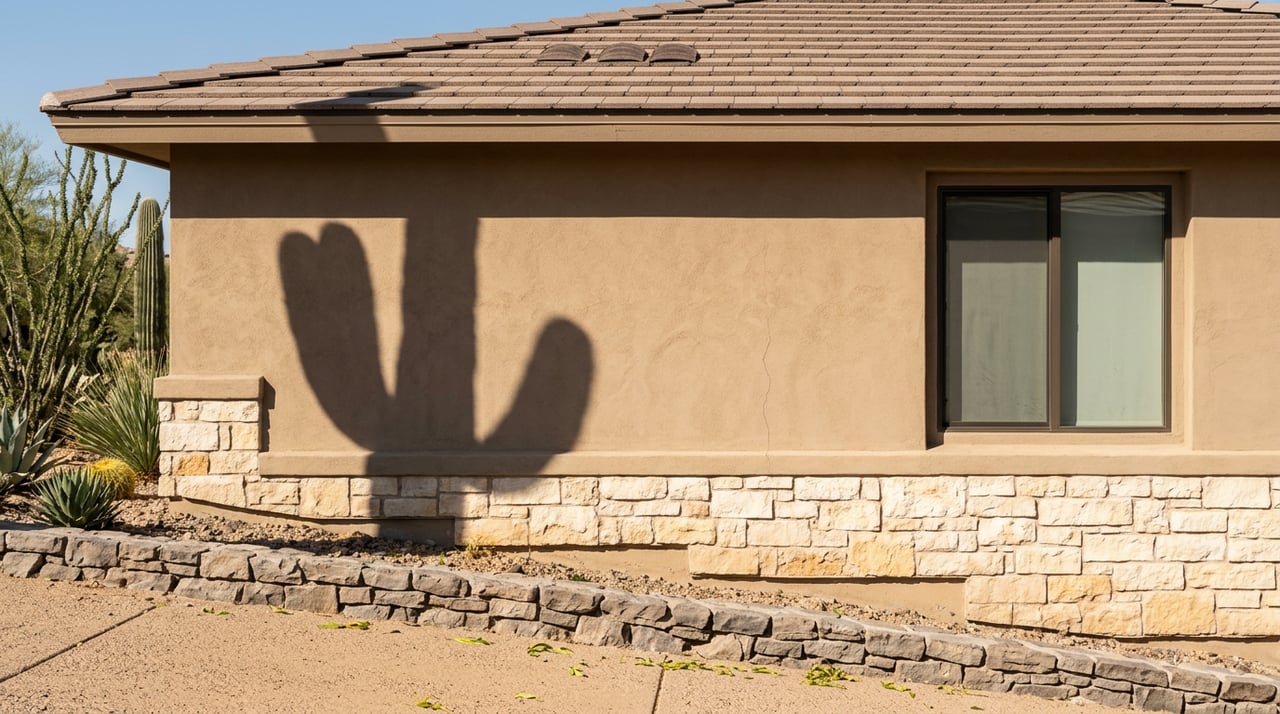
The Catalina Foothills Home Sale Details That Now Move The Price
July 23, 2026
July 23, 2026
For most of 2021 and 2022, a Foothills seller could hand a buyer a thin disclosure packet and still walk away at 102% of list. Missing well paperwork, an aging septic tank, a hillside lot with quietly noncompliant grading — none of it slowed the deal down, because the next backup offer was already circling. That market is gone.
As of June 2026, Catalina Foothills has roughly 245 active single-family listings, the highest count since late 2023, with a median sale price near $735,000, average days on market of 73, and sale-to-list holding around 96.5%. Buyers finally have room to read what they sign. Every documentation gap that used to get papered over is now a negotiation lever, and in a submarket where the average owner stays fifteen to thirty years, some of those gaps have been compounding since the last time the property traded.
Here is the thesis worth holding onto before you list or write an offer: in this submarket, the four items below are no longer administrative. They are line items on the closing statement.
The Foothills is a built-out, land-constrained census-designated place bounded by Oracle Road, River Road, Sabino Canyon Road, and the Coronado National Forest. There is no greenfield pipeline. Scarcity is structural, which is why the submarket keeps trading even as broader Tucson softens to a $310,000 median with 82 days on market and sale-to-list around 97.6% in June 2026.
What has changed is buyer patience. With inventory in the $750,000 to $1.2 million band showing the most softening in sale-to-list ratios, buyers can afford to walk away from any home whose paperwork looks like homework. Every friction below is a place where a seller who prepared before listing keeps money that a seller who did not will hand over at the inspection response.
A meaningful share of Foothills-adjacent parcels, particularly in Tanque Verde Valley, upper Sabino, and unincorporated pockets north of Skyline, are on private septic rather than municipal sewer. That triggers a set of state and county rules many long-term owners have never read.
Under Arizona Administrative Code R18-9-A316 and Pima County Code Title 7, a seller must retain a qualified inspector to complete a Report of Inspection within six months before the transfer of ownership. The inspector has to hold NAWT training recognized by ADEQ, and the Report of Inspection is submitted through the Pima County Land Permitting Customer Portal with a $50 fee. The seller then delivers the completed report to the buyer before closing. Within fifteen calendar days after the transfer, the buyer files the Notice of Transfer with Pima County. A separate $70 ADEQ transfer fee applies per parcel with a septic system.
The friction is timing. Sellers who start this process after going under contract find themselves scheduling inspectors, pumping tanks, and chasing missing Discharge Authorization records while a 30-day escrow is running. Sellers who order the inspection before listing walk into offers with a clean report, a pumped tank, and no last-minute buyer credit. The official Pima County guidance lives at pima.gov/471, and ADEQ's overview is at azdeq.gov/node/398.
Some parcels along the Foothills edge draw from private or shared domestic wells rather than a water utility. Under A.R.S. §45-594, exempt wells that pump 35 gallons per minute or less still have to be registered with the Arizona Department of Water Resources, and every well carries a unique 55-number that functions like a VIN.
Here is the trap. Recording a deed with the Pima County Recorder does not transfer the well. ADWR needs a separate filing on Form DWR 55-71A, and escrow officers often handle it at closing, but often is not always. Long-hold Foothills properties frequently show the original 1980s or 1990s owner still listed as the well owner of record.
The Arizona Association of Realtors addresses this with two mandatory forms on any transaction served by a private or shared well: the Domestic Water Well Addendum and the Domestic Water Well Water Use Addendum Seller's Property Disclosure Statement. Buyers should ask for the 55-number, the original driller's log, any water quality tests the seller has run, and, on shared systems, a current well share agreement. Some shared agreements prohibit pools, cap gallons per household per day, or assign maintenance obligations that the buyer inherits at closing.
The ADWR well registry is public and searchable at azwater.gov. Running the parcel before you list, or before you write an offer, takes ten minutes and prevents a title company from discovering the ownership mismatch three days before closing.
Pima County's Hillside Development Overlay Zone applies to any parcel with an average cross slope of 15% or greater, or to parcels with any slopes of 15% or greater. The GIS layer that maps HDZ impact areas categorizes them as Definitely and Possibly HDZ. Large portions of the Foothills fall inside one of those two categories.
What HDZ means in practice for a Foothills owner or buyer:
The chapter itself is Pima County Code Chapter 18.61, and the HDZ checklist and design requirements are at pima.gov/1136.
The pricing implication is subtle but real. A Foothills view lot that reads as a renovation opportunity to a buyer is worth meaningfully less if the buyer's architect, on day two of due diligence, discovers that expanding the footprint uphill requires a level two mitigation package.
Layered on top of the county rules, the named Foothills subdivisions each run their own architectural review boards with their own color, height, and grading covenants. Sin Vacas and Rancho Sin Vacas, Pima Canyon, Sabino Mountain, La Paloma, Ventana Canyon, Skyline Country Club Estates, and legacy Catalina Foothills Estates all fall in this group. Height limits tied to preserving downhill mountain views are the most common friction point, followed by material and roofline restrictions that catch remodel-minded buyers off guard after closing.
Sellers who pull the current CC&Rs, design guidelines, and any active architectural committee approvals into the listing packet remove a category of buyer objection that would otherwise surface in the inspection period. Buyers who ask for these documents in writing before removing contingencies avoid inheriting a violation the previous owner never cured.
The pattern under all four items is the same. In 2022, a seller could treat septic reports, well transfers, HDZ compliance, and ARB approvals as closing-week paperwork, and the market absorbed the friction. In the June 2026 Foothills market, with 245 active listings, 73 days on market, and buyers concentrating their attention on the $750,000 to $1.2 million range where sale-to-list has softened most, that same paperwork is where deals get repriced.
Preparation is now the strategy. A Foothills home that goes to market with a current septic Report of Inspection, a verified ADWR well record, a clean HDZ status letter for the parcel, and a subdivision ARB packet in the disclosures is a materially different product than a home priced identically without them. Buyers pay for confidence, and confidence in this submarket has a paper trail.
Do all Foothills homes require a septic inspection to sell? Only if the property is served by an on-site wastewater treatment facility. Homes on Tucson Water and municipal sewer skip the process. Confirming which side of the line your parcel sits on is the first call.
Can a seller pay for the buyer's septic or well concerns as a credit at closing? That is negotiable, but the state-required Report of Inspection and the ADWR ownership transfer are not credits. They are filings that have to happen. A credit resolves the money, not the paperwork.
Does HDZ apply retroactively to an existing home? It applies when you propose new development, grading, or certain exterior changes on a qualifying parcel. Existing lawful structures are not automatically noncompliant, but any addition, pool, or driveway modification pulls the parcel back into review.
If you own in the Foothills and are thinking about a 2026 or 2027 sale, the paperwork audit belongs in front of the price conversation, not behind it. Urban Oak Partners walks Catalina Foothills sellers through septic, well, HDZ, and ARB documentation before the sign goes in the yard, so the market answers with offers rather than inspection objections.
Get Your Free Home Valuation and we will build the pre-listing document plan alongside the number.
As your trusted real estate agent, I provide expert support whether you’re buying or selling. My goal is to make your transaction effortless and deliver the results you deserve, with a focus on your unique needs and goals.